

Agentic AI ERP Transformation: A Roadmap That Doesn’t Break Controls
Organizations are increasingly exploring how artificial intelligence can transform enterprise systems. ERP platforms that once focused on recording transactions are now evolving into intelligent operational environments. AI agents promise to automate complex workflows, identify operational risks, and respond to business conditions in real time.
However, many companies approach this transformation incorrectly. They attempt to install autonomy directly on top of unstable ERP environments.
This approach rarely works.
A successful Agentic AI ERP transformation requires preparation, governance, and a structured implementation strategy. Without these foundations, autonomous systems may amplify existing problems rather than solve them.
The Common Mistake: Installing Autonomy on an Unstable ERP System
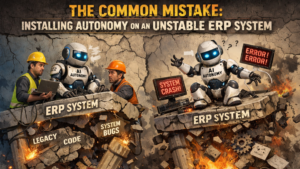
Many ERP environments still contain operational weaknesses that accumulated over years of system use. These issues often remain hidden until organizations attempt to introduce advanced automation.
Common challenges include:
• inconsistent ownership of master data
• integration errors between systems
• slow or fragmented reporting environments
• unclear accountability for operational processes
When these problems exist, introducing AI agents does not correct them. Instead, automation accelerates them.
AI systems observe patterns and execute workflows quickly. If the underlying data or processes are inconsistent, the automation simply spreads those inconsistencies faster.
For this reason, organizations must treat Agentic AI ERP transformation as an operational improvement initiative rather than a technology upgrade.
Defining the Role of Autonomy in ERP
Before implementing AI agents, organizations must determine how much autonomy they want within their ERP environment.
Autonomous systems should operate within clear operational boundaries. Establishing these boundaries early helps prevent confusion about the role of AI within enterprise workflows.
Three considerations are particularly important.
Decision Authority
Not every decision should be automated. Organizations must define which actions AI agents can execute independently and which actions should remain recommendations for human review.
For example, an AI agent might analyze supplier performance and recommend vendor changes while requiring management approval before executing procurement agreements.
Approval Thresholds
Financial and operational risk should guide approval policies. Smaller operational adjustments may be automated fully, while higher value transactions require additional oversight.
Evidence and Auditability
Autonomous actions must be traceable. Systems should record what information was used to make a decision, how the decision was evaluated, and what actions were executed.
This transparency ensures compliance with financial controls and regulatory requirements.
Preparing ERP Systems for Intelligent Automation
Before AI agents begin executing workflows, organizations must ensure that their ERP systems are ready to support intelligent operations.
Preparation typically focuses on four critical areas.
Process Identification
Not every ERP workflow is suitable for automation. Organizations should identify processes where employees spend significant time resolving repetitive exceptions.
Examples often include invoice discrepancies, reconciliation tasks, supplier onboarding, and policy validation processes.
These workflows offer clear opportunities for intelligent ERP automation.
Data Readiness
Data quality plays a major role in the success of autonomous systems. AI agents rely on structured data, accurate records, and consistent identifiers.
Organizations must ensure that master data structures, supplier records, financial accounts, and product identifiers are reliable and well governed.
Policy Definition
Autonomous systems require clear decision frameworks. Policies should specify approval rules, segregation of duties requirements, and documentation standards.
These policies guide how AI agents evaluate operational conditions.
Security Alignment
AI agents operate using system permissions. Organizations must determine which user roles agents represent when executing tasks.
Proper security alignment ensures that automated actions remain compliant with enterprise access controls.
Introducing AI Agents in Controlled Workflows
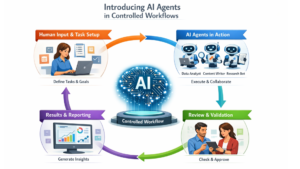
Once foundational elements are in place, organizations can begin introducing AI agents into selected ERP processes.
Starting with a focused workflow allows teams to observe how automation interacts with operational data while maintaining strong oversight.
Workflows that often benefit from early automation include:
Accounts Payable Exception Handling
Finance teams frequently investigate discrepancies between invoices, purchase orders, and delivery receipts. AI agents can analyze these documents and resolve routine discrepancies automatically.
Supplier Onboarding Validation
Supplier data must meet regulatory and operational requirements before transactions occur. AI agents can validate supplier records, verify documentation, and route approvals efficiently.
Time and Expense Compliance
Expense submissions often require validation against company policies. Automated systems can review submissions, identify policy violations, and escalate unusual transactions.
Financial Reconciliation and Variance Investigation
AI agents can analyze financial records and identify the causes of reconciliation discrepancies more quickly than traditional manual reviews.
Major technology platforms are already introducing AI capabilities in these areas. Microsoft has highlighted reconciliation support and supplier communication as emerging use cases for ERP automation.
Expanding Automation Across Enterprise Systems
Once AI agents demonstrate reliability within individual workflows, organizations can begin expanding automation across multiple enterprise systems.
ERP platforms rarely operate in isolation. They connect with CRM systems, document management platforms, support tools, and integration layers.
True ERP digital transformation occurs when automation coordinates activities across these systems.
For example:
• CRM platforms may trigger ERP workflows when sales orders are created
• customer support systems may initiate operational responses when service issues occur
• logistics systems may update ERP records when delivery disruptions occur
Automation can also respond to operational events automatically. A shipment delay in a logistics system may trigger inventory adjustments, customer notifications, or financial updates within ERP.
Closed loop feedback becomes possible at this stage. AI agents learn from corrections and outcomes, improving their responses over time.
Industry analysts expect significant growth in task specific AI agents embedded within enterprise applications over the coming years.
Scaling Automation While Maintaining Control
As organizations gain confidence in intelligent ERP automation, they can gradually expand the scope of automation across additional processes.
Scaling automation typically involves:
• introducing additional automated workflows
• increasing transaction thresholds for autonomous decisions
• reducing manual intervention in routine operations
However, governance must remain a priority.
Approval controls should remain in place where financial or regulatory oversight is required. Audit trails must capture every automated action. Organizations should conduct periodic control testing to ensure automated processes remain aligned with policy requirements.
Analysts have cautioned that many automation initiatives fail because companies scale too quickly without maintaining strong governance structures.
Automation should grow gradually based on proven reliability.
Governance as the Foundation of ERP Autonomy
The most successful Agentic AI ERP transformation initiatives share one common characteristic. They treat governance as seriously as technology.
Autonomous systems operate effectively when business policies, decision frameworks, and operational controls are clearly defined.
When governance structures guide automation, AI agents can operate transparently and responsibly.
Organizations gain the efficiency benefits of automation while maintaining accountability and regulatory compliance.
This balance is essential for sustainable enterprise automation.
Starting with a Focused ERP Automation Initiative
Organizations that want to explore autonomous ERP operations should begin with a focused initiative rather than attempting enterprise wide automation immediately.
Many companies begin with a ninety day ERP automation pilot that targets a single process area such as accounts payable exceptions or supplier onboarding validation.
This approach allows teams to observe how AI agents interact with operational data, refine policy frameworks, and measure efficiency improvements.
Once stability is achieved, automation can expand gradually across other operational workflows.
Conclusion
ERP systems are entering a new phase of evolution. Artificial intelligence is transforming them from transaction platforms into intelligent operational environments.
However, Agentic AI ERP transformation requires careful planning.
Organizations must strengthen data governance, clarify operational policies, and introduce automation gradually. When these elements are aligned, AI agents can execute workflows efficiently while preserving transparency and control.
The goal is not simply to automate ERP systems. The goal is to build enterprise platforms that support operations intelligently, responsibly, and at scale.
Companies that follow a structured roadmap will move from traditional automation toward autonomous enterprise operations with confidence.